The Chimney Safety Institute of America defines three inspection levels, and choosing the right one depends on the situation. A Level 1 inspection is the visual baseline for a fireplace used the same way each year with…
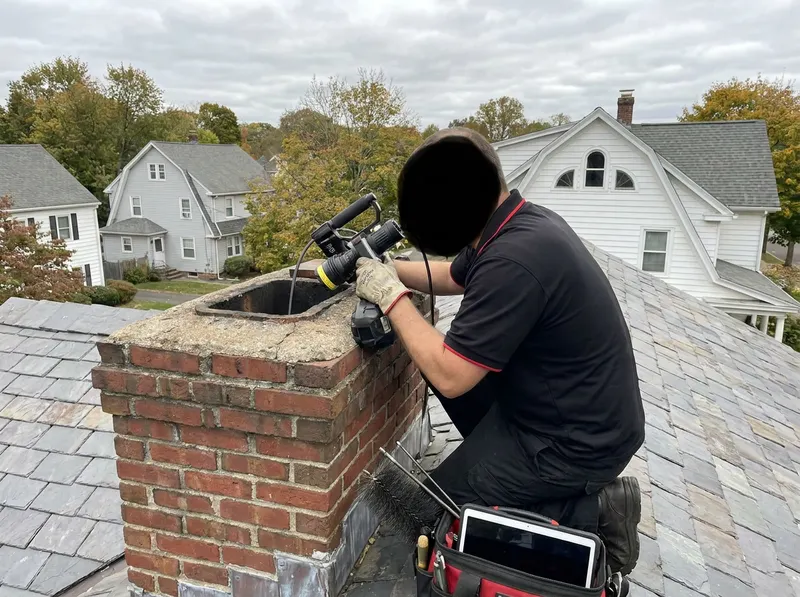
The Chimney Safety Institute of America defines three inspection levels, and choosing the right one depends on the situation. A Level 1 inspection is the visual baseline for a fireplace used the same way each year with no known problems, the technician checks the readily accessible parts of the flue, firebox, damper, and exterior for soot, creosote, and obvious damage. It fits a routine pre-winter safety check for a homeowner in East Rock or Westville who burns wood every season and hasn't changed anything.
A level two inspection is required by NFPA 211 in three specific cases: before or after a property sale, after adding or changing an appliance (such as switching to a wood stove insert), and after a chimney fire, earthquake, or other event that could have damaged the flue. A Level 2 chimney inspection includes everything in a Level 1 plus a video camera scan run down the full length of the flue liner and a look at accessible attic, crawlspace, and basement chimney sections. Buyers closing on an older Wooster Square or Prospect Hill home commonly need the Level 2 for their real-estate transaction. The trade-off: a Level 2 costs more and takes longer because the camera documents cracks, gaps in the liner, and hidden creosote a visual-only check cannot reach.
Soot and glazed creosote inside the flue are the reason inspections matter, creosote is combustible, and a Third-Degree glazed layer is the fuel behind most chimney fires. Homes in Fair Haven, Dixwell, and The Hill with masonry chimneys built decades ago often show mortar erosion at the crown and cracked clay tiles that only a camera confirms. The inspection produces photos of what's actually inside the flue, so the condition is documented rather than described. If the flue needs cleaning, that is a separate service from the inspection itself.
How it works is straightforward. First, the technician confirms the appliance type and how the fireplace is used. Second, the accessible interior and exterior components are examined against NFPA 211. Third, on a Level 2, a camera is fed through the flue to record the liner's full length. Fourth, findings are shown in photos, and if repairs are needed, a written chimney inspection and repair estimate is provided at no charge. Homes in Morris Cove and Beaver Hills near the shoreline see more freeze-thaw spalling on exterior brick, which the exterior portion of the inspection covers.
An inspection is not a cleaning, and a cleaning is not an inspection, the inspection tells you the condition and whether cleaning or repair is needed, while the cleaning removes the creosote. A same-day chimney inspection is often available in New Haven before a cold snap, subject to scheduling. The free on-site estimate covers any repair the inspection identifies; the inspection fee and a chimney cleaning estimate are quoted before the visit at (475) 387-3917.
Every job gets a firm, written price after a free on-site visit.
Tell us about your chimney inspection job in New Haven and we'll send a clear, written quote, usually the same day.
 Sootbuster Chimney Sweep